

Last week I spoke to Year 6 pupils at Kingswood Preparatory School about the Windrush generation.
The session supported their current study of Windrush Child by Benjamin Zephaniah. The aim was to connect the literature they are reading with the historical experience behind it.
The presentation drew on my own family history. My father travelled from Jamaica to Britain as part of the Windrush generation, following the earlier journey of my grandparents. Their experience provided a starting point for discussing the wider story of post-war migration to Britain.
The pupils were introduced to the Atlantic crossing, the conditions of travel, and the uncertainty of arrival.
Alongside the historical context, I brought a number of family items into the session, including a trunk that had travelled during migration. Objects like this help anchor history in something tangible and allow pupils to picture the journey in practical terms.
Music also formed part of the session. A short piece played on guitar was included to evoke the long evenings at sea described by many who made the crossing.
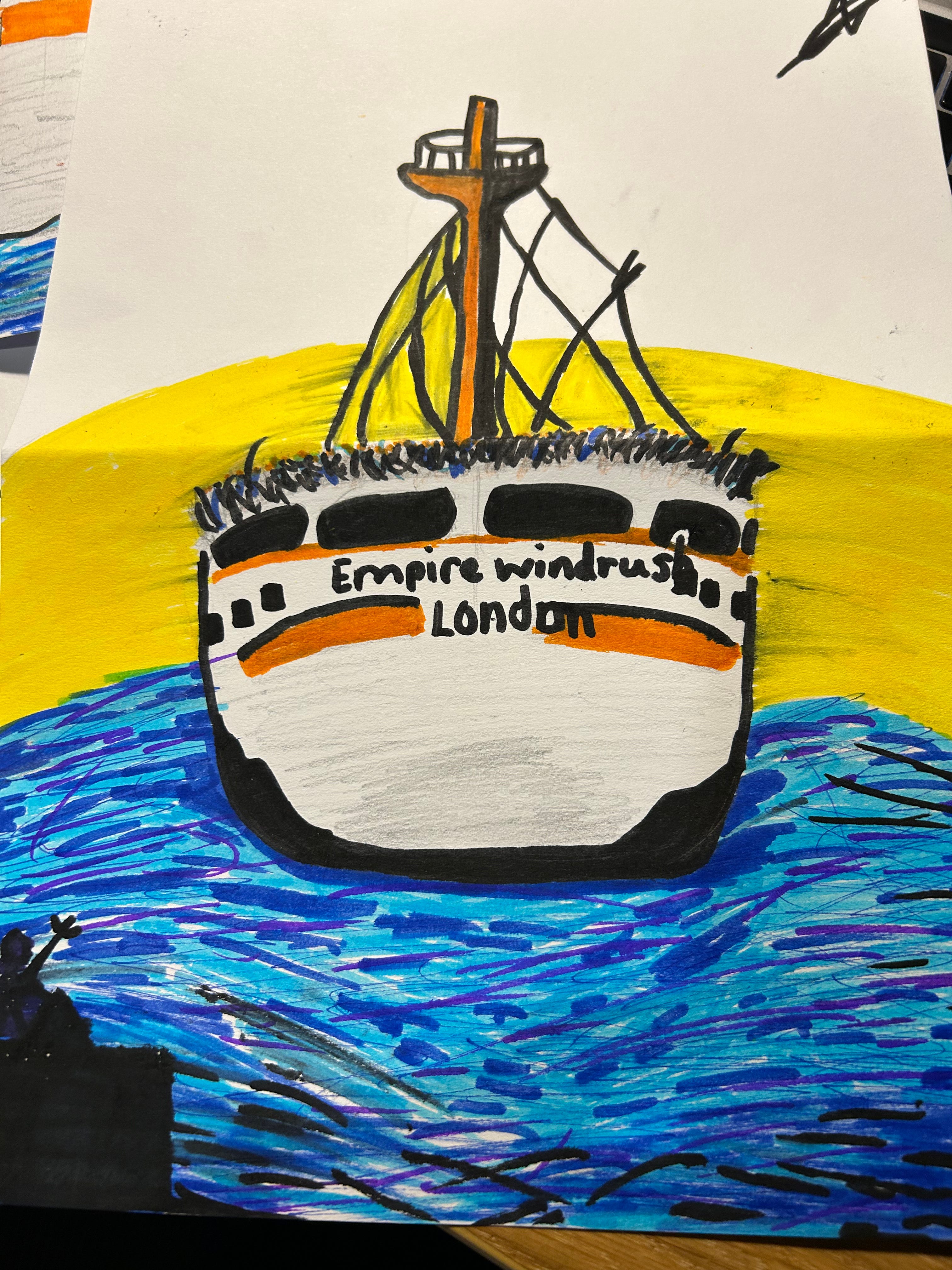
Later in the day, the class presented a series of drawings of the Empire Windrush crossing the Atlantic, together with a handwritten letter reflecting on what they had learned. Their writing showed a clear understanding of the emotional reality of leaving home and travelling across the ocean towards an uncertain future.
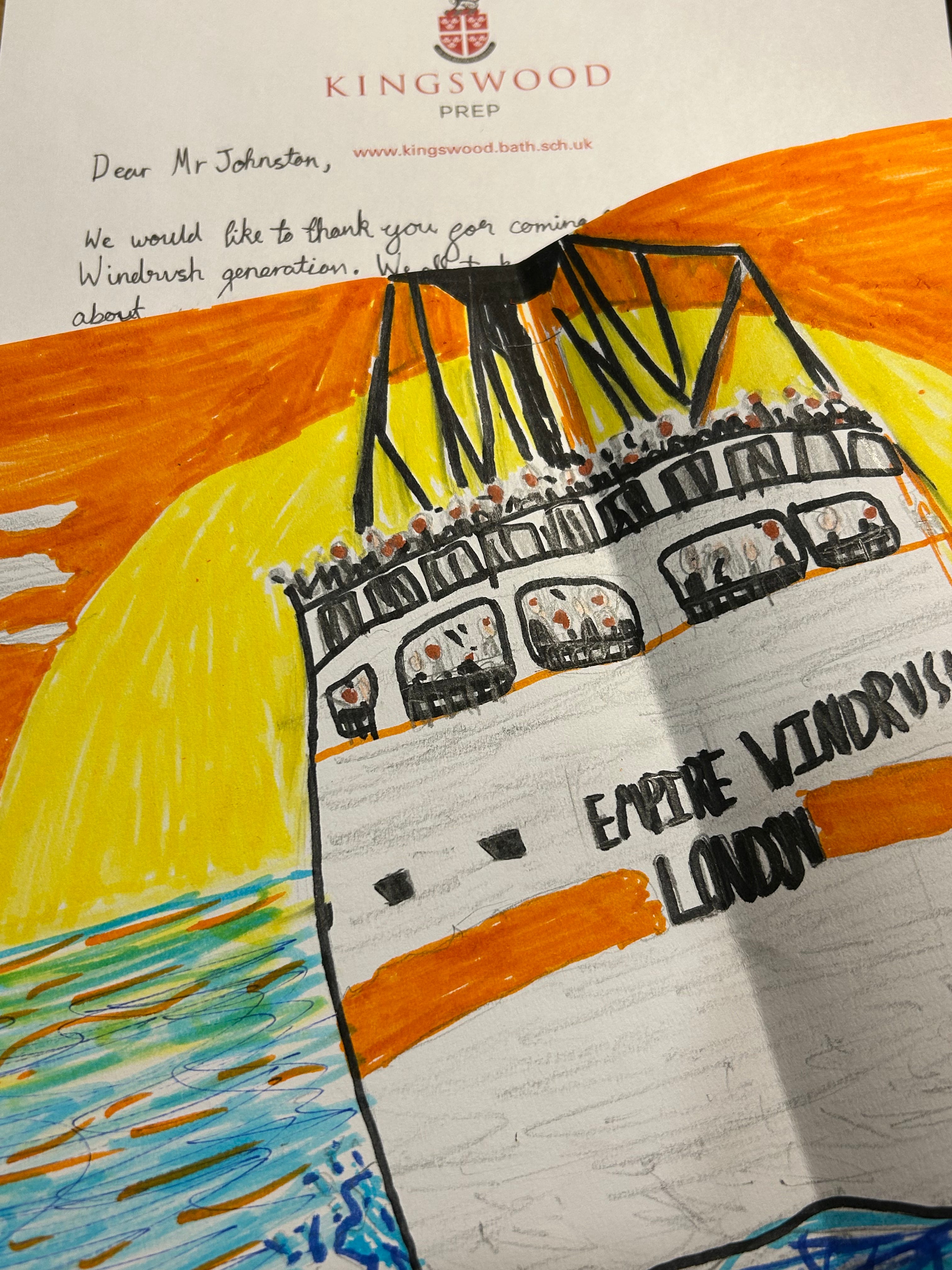
One passage in the letter read:
“Next year’s Year 6 would deeply benefit if you came back.”
The teaching staff were equally generous in their feedback.
Kingswood Preparatory School shared the following testimonial:
“Matt delivered a powerful and engaging assembly for our Year 6 students, who are currently studying Windrush Child by Benjamin Zephaniah in their English lessons. He shared his own family’s history, drawing on the experiences of his father and grandparents as part of the Windrush Generation. The presentation was thoughtfully designed and perfectly pitched to the needs of our students at Kingswood Preparatory School. Through a combination of visual slides, family artefacts, and even a live guitar performance, Matt brought this important chapter of history to life. These elements captured the pupils’ attention and deepened their understanding, leaving them thoroughly engaged, inspired, and motivated by the assembly.”
After sharing the pupils’ drawings online, the National Windrush Museum reshared the images and commented on the quality of the work produced by the class.
The drawings and letter from Year 6 are now on the wall in my office. They are a reminder of how seriously the pupils engaged with the subject and the care they put into their response.
Work like this is becoming an increasingly important part of the TREE Foundation’s work. Alongside preserving archival records of enslavement and emancipation, we are developing ways to bring these histories into classrooms, museums and public spaces. Engagement with younger audiences forms an important part of that effort.