

The last newsletter update was in October 25, following the launch of the TREE Foundation at Dyrham Park. Since then, the work has continued, though much of it has taken place away from view.
January feels like the right moment to record what has unfolded since then. Not as a list of outputs, but as a continuation of the responsibility that comes with holding these records.
TREE was founded as a family-led trust. What began as documents kept safe within our family has now entered public life. That transition brings with it obligation, care, and scrutiny. It also brings moments that sit alongside the historical archive and shape the collection as it grows.
A recorded act of responsibility
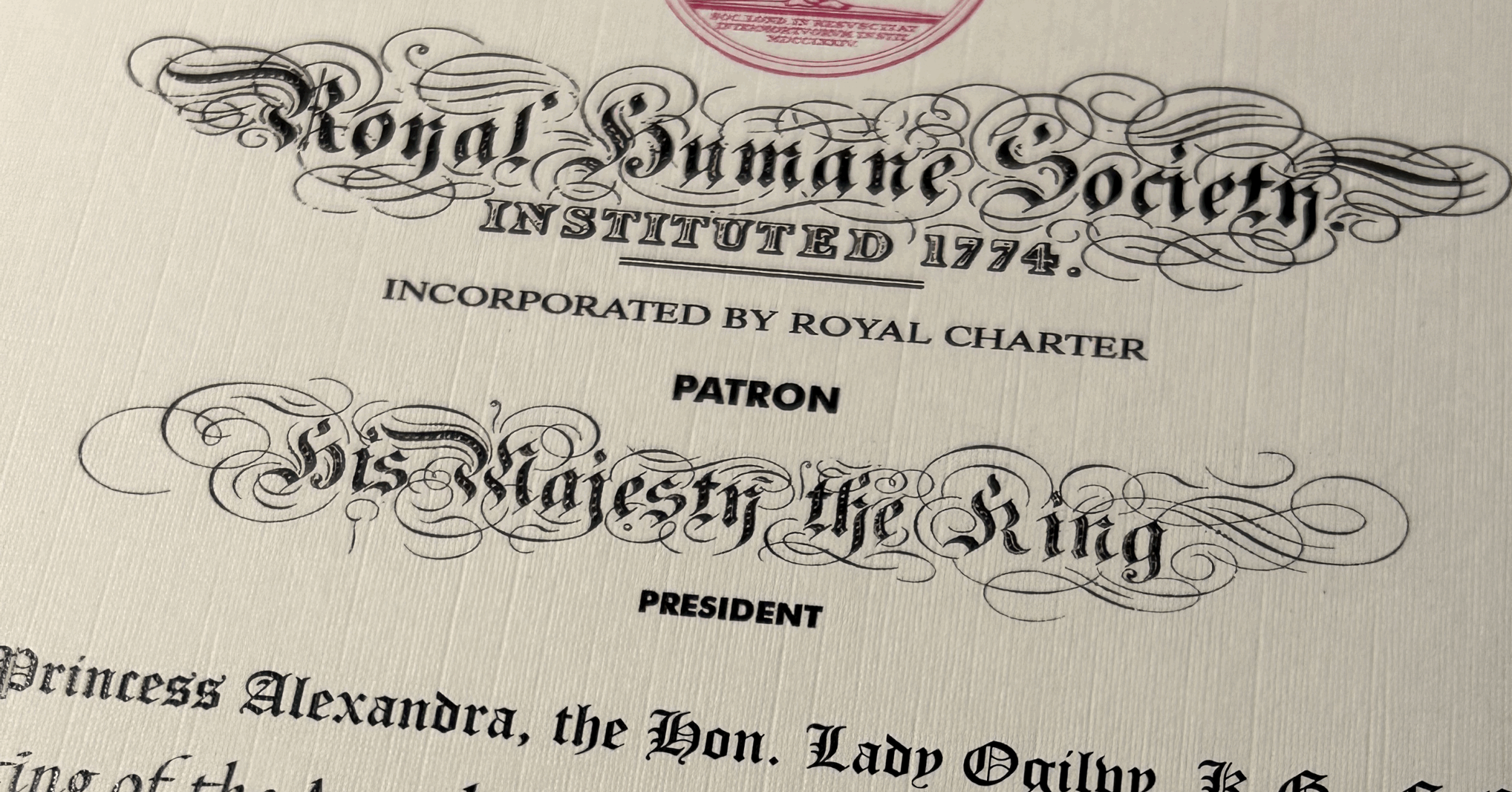
In November, I was formally recognised by the Royal Humane Society with a Testimonial on Parchment for lifesaving action in 2023.
The recognition relates to an incident in which a woman was at immediate risk of drowning in the River Avon. The circumstances required rapid assessment and decisive intervention.
The Royal Humane Society doesn’t issue testimonials as honours in the conventional sense. They exist as records. They place on file moments where judgement, timing, and responsibility altered an outcome that would otherwise have resulted in loss of life.
Much of the historical material held within the TREE archive documents moments when responsibility was deferred rather than assumed. Lives reduced to valuations. Acts enabled by distance, administration, and process. The Testimonial records a different kind of decision. One where responsibility was taken directly, and action was not displaced.
The decision to incorporate this Testimonial into the wider TREE collection is deliberate. It will sit as a modern civic artefact alongside historical records that speak to power, authority, and responsibility across time.
Working within historic spaces
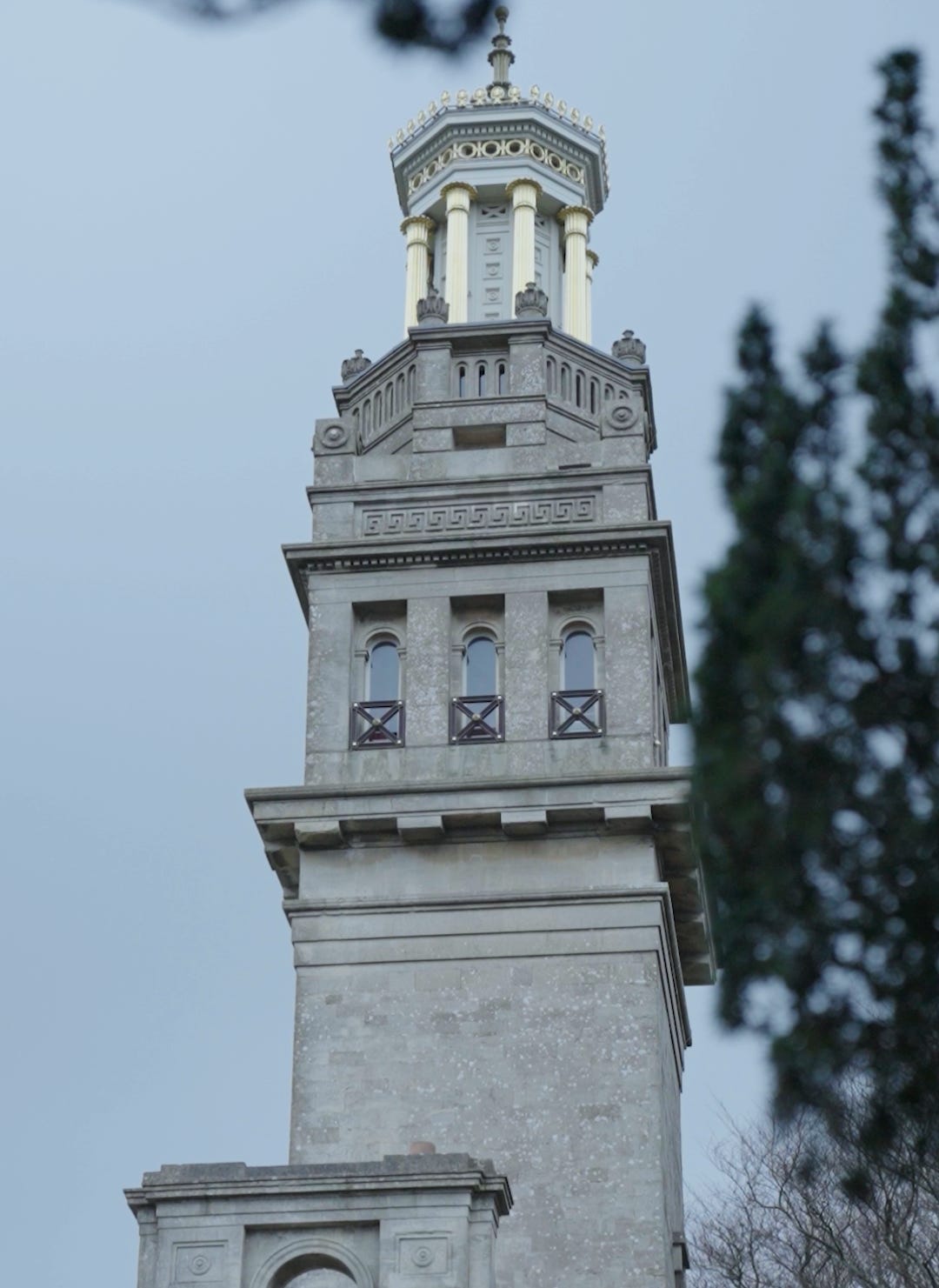
Later in 2025, TREE undertook public engagement work at Beckford’s Tower, in partnership with Bath Preservation Trust.
Beckford’s Tower is inseparable from wealth generated through colonial and enslavement-era economies. Any engagement within that space carries responsibility. For TREE, this wasn’t about interpretation layered onto the site, but about grounding discussion in original archival material and primary sources.
Evidence in circulation
During this same period, TREE submitted a full evidence pack to the National Trust to support the updating of its Interim Colonialism Report.
Receipt of the material has been confirmed and the review is ongoing. This pace reflects the reality of evidence-led heritage work, where scrutiny matters more than speed.
TREE has also participated in national discussions with academic and heritage partners examining how histories of enslavement are researched, mapped, and communicated in public settings. These conversations aren’t announcements. They’re foundations.
Public conversation
In January, I spoke at a workshop hosted by Heirs of Slavery, using original documents from the TREE archive to explore how historical evidence shapes, and often unsettles, inherited narratives.
Rather than advancing a single interpretation, the session focused on the nature of primary sources themselves: documents produced within systems of power, administration, and control, which record some lives clearly while obscuring others.
This kind of engagement sits at the core of TREE’s work. By prioritising careful handling, context, and accuracy, TREE supports public discussion that remains anchored in the historical record, allowing interpretation to emerge from evidence rather than replace it.
Words Matter
TREE will also commence its Words Matter campaign during early 2026.
This work addresses how language is used in institutional, educational, and public-facing writing about enslavement and colonial history. It’s grounded in UK guidance, archival accuracy, and professional practice.
The campaign doesn’t prescribe identity. It focuses on how organisations and institutions describe people, histories, and evidence in formal contexts.
This work has already informed TREE’s own publications and teaching materials. It will now be shared more openly.
Education in progress
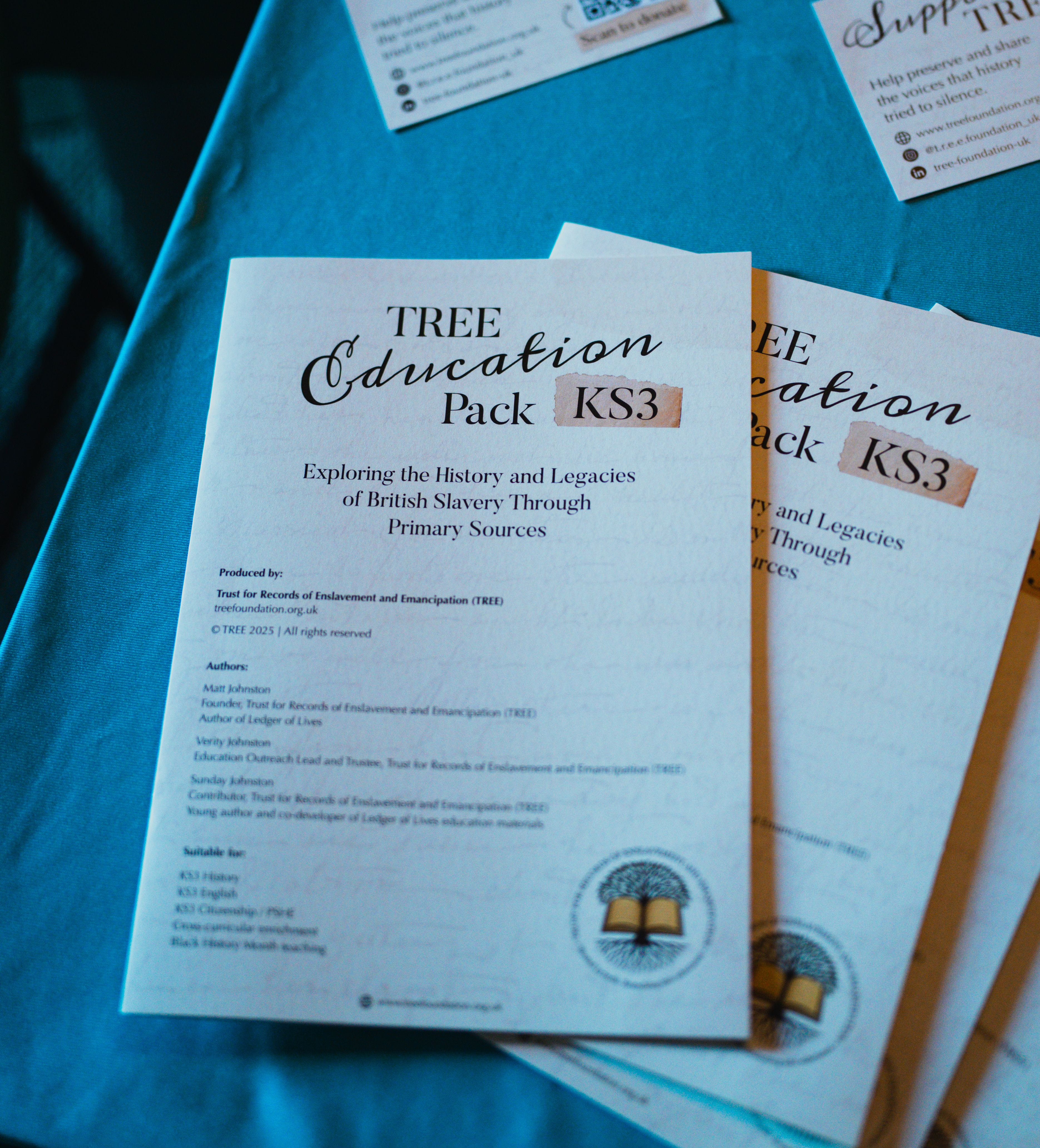
TREE materials continue to be used by secondary school teachers, home educators, and heritage professionals. This engagement has remained steady since October 25 and reflects sustained, practical use rather than one-off interest.
In most cases, the materials are being used to support direct work with original sources. Estate inventories, correspondence, and newspaper records are being read closely, not summarised or simplified, and used to examine how historical systems recorded, categorised, and obscured lives.
The Foundation’s approach remains consistent. Primary sources are placed at the centre of learning, supported by contextual material that aids understanding without replacing direct encounter. This allows learners to grapple with evidence as it exists, including its silences, distortions, and administrative logic.
What follows
Early 2026 will focus on:
Further public talks and workshops grounded in original archival material
Continued partnership development with heritage organisations, shaped by shared standards of evidence and care
Delivery of the Words Matter work in institutional and educational contexts
Preparation of selected materials for wider public release, where appropriate
Work will continue at a pace set by evidence, capacity, and responsibility.
Closing reflection
The documents at the heart of TREE have travelled a long way. From plantations in the Caribbean, to decades of family custody, to public institutions and active use.
TREE exists to preserve these records and to place them into public circulation where they can be studied, questioned, and understood. This work depends on accuracy, restraint, and responsibility.
Thank you to everyone who continues to support and place trust in this work.
With gratitude,
Matt Johnston
Founder, TREE
treefoundation.org.uk | info@treefoundation.org.uk | Follow us: @t.r.e.e.foundation_uk