

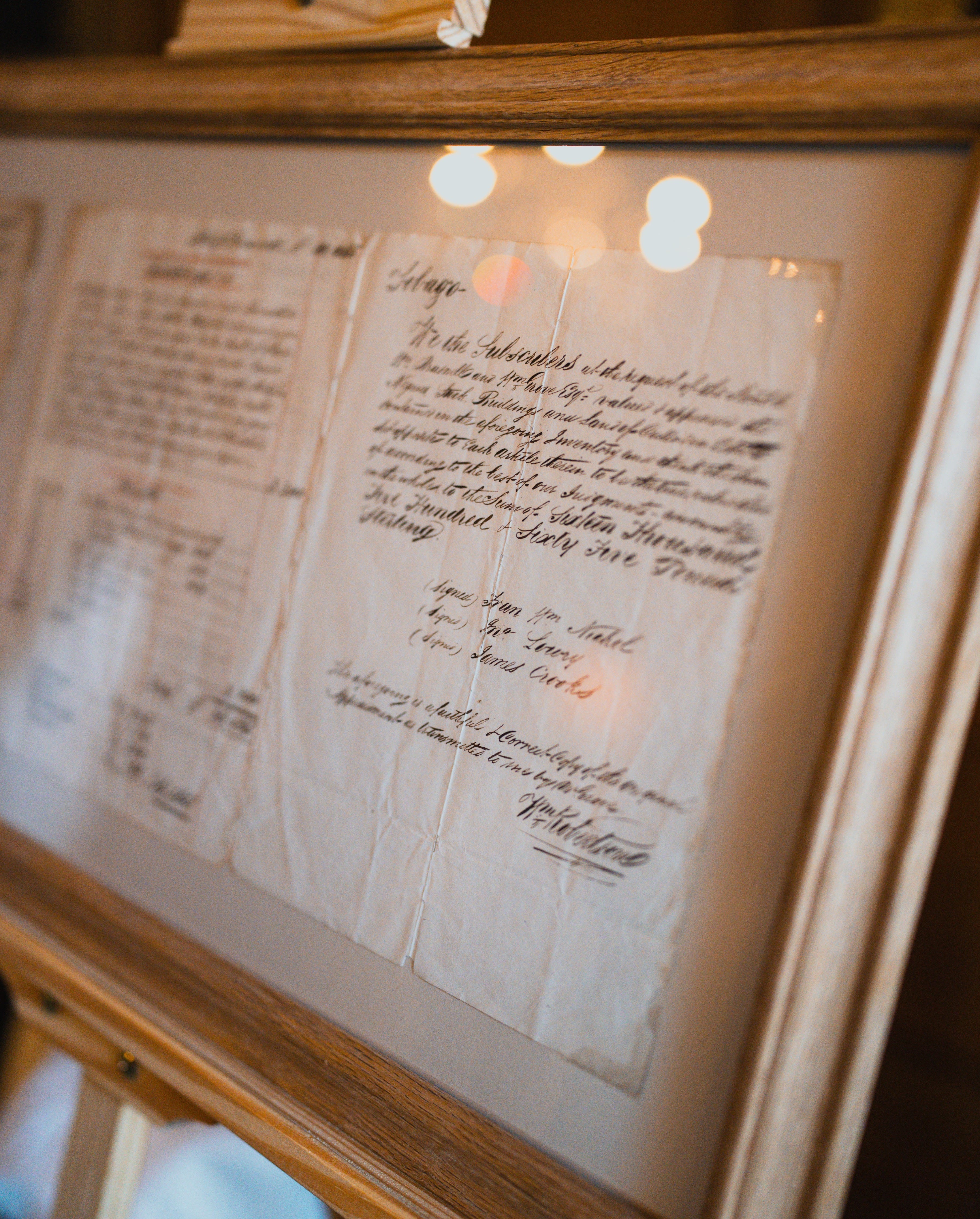
When we founded TREE earlier this year (May 25), there was no roadmap, only conviction. Conviction that truth should be preserved, and that even small archives can hold national significance.
In less than five months, we went from an idea on paper to a registered charity (Charitable Incorporated Organisation) with trustees, partners, and a public launch inside a National Trust property.
That pace was not driven by luck. It was driven by belief and by community.
How TREE Began
TREE started with a handful of fragile family documents, records of enslavement, compensation, and the people whose lives were written in another hand.
At first, the goal was simple: to understand what we had. As the research deepened, the responsibility grew. These were not just personal artefacts; they were national evidence.
Within months, what began as a private archive became a public commitment to preserve, interpret, and share these records with honesty and care.
From Idea to Institution in Five Months
Becoming a charity in five months sounds impossible, but it happened because people stepped up. Trustees, advisors, designers, educators, and friends all volunteered their time, expertise, and energy.
We built the foundation while also preparing our first exhibition. By September 2025, TREE launched publicly at Dyrham Park, displaying original documents alongside newly written educational materials. That event was not the end of a process; it was the beginning of a movement.
By the Numbers
In just five months, TREE had:
Registered as a UK charity (CIO)
Held one public launch (Dyrham Park, September 2025)
Created an exhibition
Conserved multiple historical artefacts
Released two education packs on TES
Received its first corporate donation
Confirmed its next exhibition (2026)
Every figure represents time, trust, and teamwork.
Community Is the Strength
Every milestone came from community, not capital.
National Heritage Organisations opened their doors to partnership.
Local businesses offered sponsorship and advice.
Teachers and home educators reached out for materials.
Families and friends donated time, ideas, and encouragement.
TREE stands today because people believed in what it represents: remembrance and truth, and because they acted.
Community is not a nice-to-have; it is the infrastructure.
Why This Matters Now
Across Britain, conversations about history are shifting. TREE’s mission is to make sure they are informed as well as heartfelt, grounded in evidence rather than opinion.
That is why we digitise, transcribe, and interpret the documents that shaped lives and legacies. These records reveal how policies were written, wealth was transferred, and human stories were silenced. Our role is to make those truths visible again.
What We’ve Learned
1. Rejections come before recognition.
Our first funding bids failed. Each “no” taught us to define our purpose more clearly and to speak our mission more directly.
2. Build before you are ready.
If we had waited for permission, TREE would not exist. We built in motion, writing policies, designing panels, and refining work all at once.
3. Show your workings.
We made a deliberate choice to be transparent, sharing budgets, and even the setbacks. The goal is not polish; it is trust.
4. Keep purpose over perfection.
TREE is evidence-led. We do not polarise or dramatise; we document and interpret. That principle guides every exhibition, publication, and partnership.
Looking Ahead
TREE’s next chapter focuses on sustainability and reach, expanding our teaching resources, preparing the future exhibitions (2026), and deepening partnerships with heritage and education networks across the UK.
We are now looking to connect with teachers, researchers, sponsors, and community groups who share this belief that evidence can change understanding. If that is you, reach out. TREE’s growth has always begun with a conversation.
We still remember holding those first pages, ink fading and edges breaking, and realising that silence is also a form of inheritance. TREE exists to make sure that inheritance becomes knowledge.